

Wasps
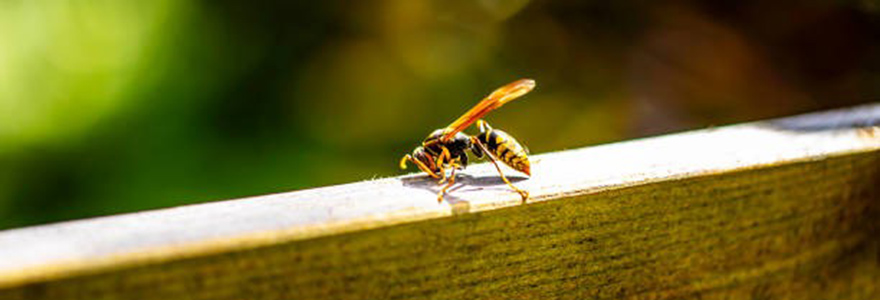
Wasps and their nests
Wasps are a natural part of the environment, especially during the summer months. In many cases, their nests can be safely left alone. This page is here to help residents understand the benefits of wasps, when a nest may need attention and what to do depending on the situation, whether that means leaving it alone, contacting a pest control professional or reporting it to the City.
Wasp nest response by location
This table summarizes the City's response to reported wasp nests and foraging activity by location. "In season" means April to October, when wasp activity is highest. Outside this window (November to March), no treatment is required regardless of nest type or location. Distances shown apply only to nests on City property.
| Location | Treat within 24 hours | Signage only |
| Playground/sports field | Any nest, in season | Foraging, in season |
| High-traffic sidewalk | Nest within 20' (City property), in season | Foraging, in season |
| Low-traffic sidewalk | Nest within 10' (City property, in season | — |
| Natural area trail | Nest within 10', in season | — |
| Open park space | — | Any nest, in season |
| Road/ditch, no sidewalk | — | — |
Who is responsible?
Many wasp nests can be safely left alone. Where treatment is necessary, responsibility generally depends on where the nest is located.
| Nest location | Typical responsibility |
| Private residential property | Property owner |
| Strata common property | Strata corporation or property manager |
| Commercial property | Property owner or business operator |
| City park, trail, civic facility, boulevard or other City property | City, where there is a public safety concern |
| Utility of service equipment | Utility or infrastructure owner |
| School grounds and related parking lots | Richmond School District No. 38 |
Why wasps are important
Wasps help the environment in more than one way. Some species contribute to pollination as they move between flowers, and many wasps also help control other insects by feeding on caterpillars, flies and other garden or landscape pests. This makes them a beneficial part of the local ecosystem.
Although wasps are often viewed only as a nuisance, they are not usually aggressive unless their nest is disturbed. Understanding their role can help residents make informed decisions and avoid unnecessary treatment, like pesticides.
Risks of pesticides
Pesticides can affect more than just the target nest. Improper use may harm pollinators and other beneficial insects, and it can also pose risks to children, pets, wildlife and the surrounding environment. Spraying in the wrong location or at the wrong time may make wasps more aggressive and increase the chance of stings.
For these reasons, pesticide use should be limited to situations where it is clearly needed. When treatment is necessary, carefully following product label or using a licensed professional can help reduce risks to people and the environment.
When a nest may need treatment
Not every nest needs to be removed. Treatment may be appropriate when a nest creates an ongoing safety concern that cannot be managed by simply keeping away from the area.
A nest may need treatment if it is:
- Close to a doorway, walkway, patio, deck, playground or seating area
- In a place where people cannot easily avoid it
- Inside a wall, roofline, attic, crawlspace or other enclosed space
- Causing repeated encounters or stings
- Located near someone with a known severe allergy to stings
If the nest is not creating a clear risk, monitoring may be the better option.
When monitoring is enough
Many wasp nests can be left alone if they are in a low-traffic area and are not affecting daily activity. If the nest is away from entrances, sidewalks, play areas and other commonly used spaces, monitoring may be the best option. In these cases, avoiding the area and not disturbing the nest is often enough.
Monitoring is also appropriate when the nest is small, early in the season or in a location where people and pets can safely stay away. Not every nest requires action, and avoiding unnecessary treatment helps protect beneficial insects and reduce pesticide use.
Private property options and when to contact pest control
If a wasp nest is located on private property, residents should first consider whether it can simply be monitored and avoided. If the nest is not in a high-traffic area and is not causing a safety issue, treatment may not be necessary.
If treatment is needed, residents can contact a licensed pest control professional to discuss options. This is especially important when the nest is inside a structure, difficult to access or located in an area where people regularly pass by.
Pest control should also be considered if someone on the property has a severe sting allergy, if the nest is large and active, or if previous attempts to manage the problem have not worked. Professional service can help reduce the risk of stings and avoid ineffective or unsafe treatment.
Do not attempt removal yourself if you cannot clearly see the full nest or if reaching it would be unsafe.
Prevention tips
Residents can help reduce wasp activity around homes and outdoor spaces by keeping garbage, compost and recycling containers closed and by cleaning up food waste, sugary drinks and fallen fruit. Wasps are attracted to food sources, especially during the warmer months and later in the season.
It can also help to inspect sheds, play structures, eaves and other sheltered areas in spring and early summer, when nests are smaller and easier to spot. Sealing gaps in siding, soffits and other building openings may also reduce the chance of wasps nesting in structures.
When to report a nest to the City
Residents may wish to report a nest if it is on City property and creating a public safety concern in a high-use area. This may include locations such as:- Parks
- Trails
- Sidewalks
- Playgrounds
- Sports fields
- Civic facilities
- Public entrances or seating areas
Refer to the Wasp Nest Response by Location accordion toggle above for specifics on how the City responds based on location.
Reports are most helpful when they include:- The exact or approximate location
- What type of area it is in
- Why it is a safety concern
- Whether anyone has been stung
Nests on private property are generally not a City responsibility.
Wasp FAQs
Q: Are wasps dangerous?
Wasps are not always dangerous. Many species live alone and generally avoid people, while many others help pollinate plants. However, some wasps live in groups and share the same nest. These wasps may aggressively defend their nest or food if they feel threatened. Unlike bees, wasps can sting repeatedly, and their stings are often painful.
Q: Why do some wasps sting?
In stinging species, only the females are provided with a formidable sting.
Stings can happen when people or animals bother wasps that are hunting for food or when they approach a nest by accident, triggering a defensive reaction from wasps guarding the nest.
Q: How are wasps different from bees?
Physical characteristics:- Bees tend to be fuzzy and have more rounded bodies.
- Wasps have a narrow waist and hairless body and legs.
- Bees feed only on plant pollen and nectar.
- Wasps are predators and scavengers. They hunt other insects and will feed on ripe fruit and human foods.
Q: Where do wasps live?
Most solitary wasps nest in the ground, digging tunnels in the soil to lay their eggs. They place paralyzed insects or spiders in the nest as food for their young.
Social wasps’ nests may be found in cavities in the soil, in tree trunks or hanging from leaves, branches or the eaves of buildings. These nests can be dangerous to human beings because workers may defend them aggressively.
Q: What happens to wasps in the winter?
Worker wasps of social species die off late in autumn, while recently emerged females hibernate. They spend the cold months in sheltered areas such as lofts and animal burrows.
But only some will survive the winter. Those that do, emerge when the weather warms up. These female wasps begin to form new colonies. After building a small nest, the new queen lays eggs of the first workers.
Wasp Seasonal Activity
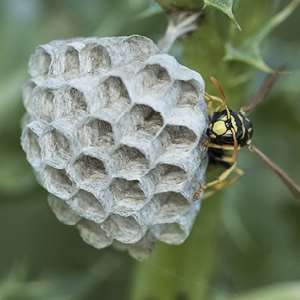
The table below outlines key seasonal activity:| Spring (April-May) |
Queen wasps emerge and start new nests. Colonies are small and usually less noticeable. |
 |
| Summer (June-July) |
Colonies grow larger as worker wasps build the nests and care for the young. | 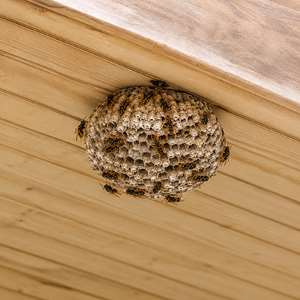 |
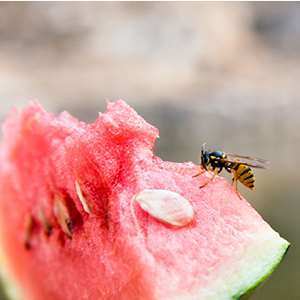
| Late Summer (August-September) |
Colonies reach their largest size. Wasps are most active and are more likely to be seen near food. |
 |
| Fall (October) |
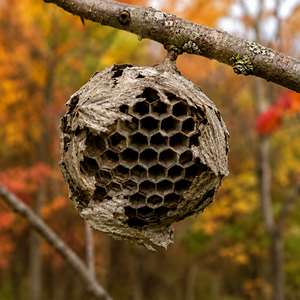
The colony life cycle ends. Workers die, nests are abandoned and old nests are not reused. |
 |
| Winter (November-March) |
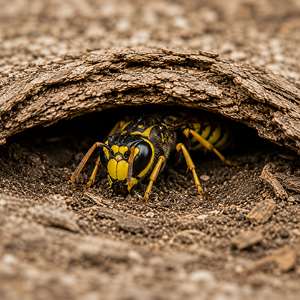
Only fertilized queens survive winter. They shelter in protected locations until spring. |
 |